 Hallhush
Why you can hear every word from the hallway
If you rent a room in a shared house or a flat, you've probably lain awake listening to a conversation in the corridor as if it were happening at the end of your bed. The door is shut. So why is it that loud?
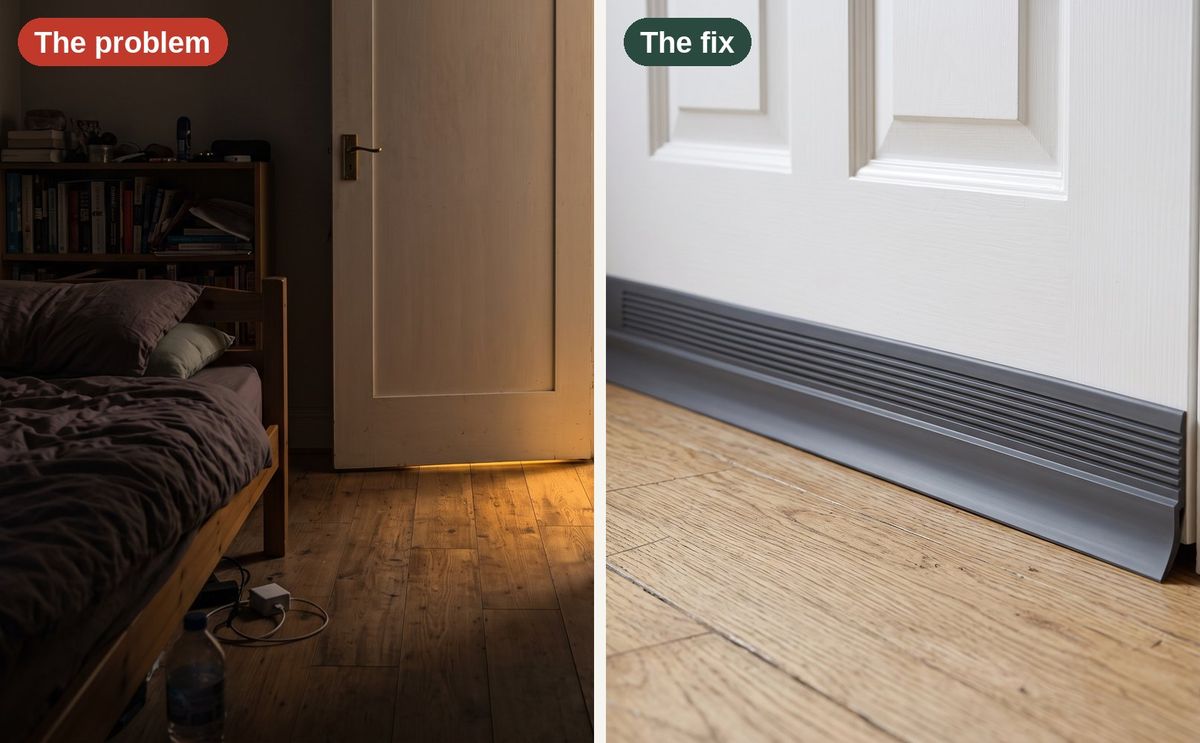
If light gets under your door, so does sound. Illustrative image.
Most of the noise isn't coming through the door
It's coming round it. Sound takes the easiest route, and an air gap is far easier to get through than a slab of wood. Most internal doors in rented places have three of them:
- Under the door. Usually the biggest. If you can see a line of light from the hallway at night, that's your main leak.
- Round the frame. A thin gap down both sides and across the top, where the door meets the frame.
- The window. If your room faces a street, an unsealed window lets traffic in the same way.
That's why a heavier door, a rug or earplugs often disappoints. They don't touch the gaps.
Why renters usually put up with it
The proper fixes involve drilling: an automatic door seal, new frame stops, sometimes a new door. You can't do that without the landlord's say, and you don't want to lose your deposit over it. So most people live with it.
The ten-minute version
Close the gaps without tools. A self-adhesive strip along the bottom of the door, a seal round the frame, and a seal on the window. They peel off when you move out. It takes about ten minutes with a pair of scissors.
What to expect, honestly
- It takes the edge off voices, TVs and doors in the corridor, and stops the light and draught under the door.
- It won't stop footsteps from the floor above, bass through the walls, or noise that comes through the wall itself.
- It is not soundproofing. It closes the gaps, which is where a lot of the noise was getting in.
The Hallhush Room Kit · £29.99
Door-bottom strip, frame seal and window seal. No drilling. Free UK delivery.
Get the Room Kit30-day guarantee: if it doesn't make a difference, send us a photo of it fitted and we'll refund you. No need to post it back.
Fire doors: if your door has a fire and smoke seal, never cover it, and don't fit frame seal on that door. The door must still close and latch on its own. Fitting guide.